
How Thumbtack uses Lifecycle Studio to cut campaign cycles from six weeks to days and deliver personalization at scale
Thumbtack connects homeowners with local professionals across hundreds of service categories. As personalization demands grew, Joshua Mack, Director of Performance Marketing, and Alex Goldstein, Senior Lifecycle Marketing Manager, needed a faster way to turn ideas into campaigns. With Hightouch Lifecycle Studio, the team reduced campaign cycles from weeks to days, eliminated much of the cross-team coordination required to launch campaigns, and unlocked a level of personalization that was previously out of reach.
Results at a glance
10×Idea to live campaign dropped from 4-6 weeks to days
75%Time spent coordinating across teams dropped from ~40 hours to ~10.
10×On-brand, personalized variants increased from 1–2 to 20+.
The challenge
Launching a campaign meant coordinating across five or more teams, creating dependencies that slowed everything down. A typical program took four to six weeks from idea to launch, so the team naturally prioritized the campaigns with the biggest expected impact. For high-priority campaigns, Thumbtack could pull together the data science, creative, and engineering support needed to go deep — but for everything else, the lifecycle team worked from assumptions.
-
They couldn't create enough personalized content. The data suggested dozens of opportunities to tailor messaging, but producing variants for each segment would have overwhelmed an already stretched team. Most campaigns ended up with only one or two versions, regardless of how nuanced the strategy was.
-
They couldn't quickly test or validate audience assumptions before building a campaign. Sizing a segment, understanding an audience, or testing a new angle required going through the data science team. For Thumbtack's biggest campaigns, they could invest the time and resources. For most campaigns, the team moved forward on assumptions, or the idea didn't move at all. "A lot of great ideas kind of just sit on our backlog," said Alex Goldstein, Senior Lifecycle Marketing Manager.
-
They couldn't quickly understand what was working. Once a campaign launched, learning what worked required another request, another queue, and another few weeks of waiting. By the time the team had a signal to act on, they were already deep into the next campaign.
A typical campaign consumed roughly 40 hours of work across multiple teams. More frustrating, the process forced the team into one-size-fits-all marketing.
The problem came into focus when Josh and his team sat with their campaign calendar. They found seasonal messages were going out to millions of homeowners, regardless of who they were. "Hey, it's springtime, take care of your lawn." — the same line for everyone, whether they lived in Massachusetts or Texas.
They knew exactly what those messages should include: different timing for different climates, different recommendations for different home types, different advice for the homeowner with a half-acre yard versus the one renting a studio. But creating and managing that level of personalization wasn't practical with the way the team worked.
“We knew we were leaving money on the table. We wanted to get to 20 or 30 variants based on where the user is and what we know about their home. There was no way we could do that with our internal resources and tools. We realized this was a huge issue.”

Joshua Mack
Director of Performance Marketing at Thumbtack
A new way of working
Thumbtack had already been using Hightouch's Agentic CDP, built on a composable data architecture, to make customer data accessible to marketers. That existing foundation shortened the path to adopting Lifecycle Studio.
Lifecycle Studio sits directly on top of Thumbtack's BigQuery data and also incorporates the team's brand guidelines, campaign history, and best practices into the workflow. More importantly, it made much of the lifecycle process self-service.
Instead of writing a brief, filing a request, and waiting for specialized teams to weigh in, Alex and her team could start exploring an idea immediately. The agent helps marketers answer the questions that previously required a trip through the data science queue: Is the audience large enough to matter? Do these segments actually behave differently? Is a personalization angle strong enough to justify building? The team can now resolve questions that once took weeks to answer while the campaign is still taking shape.
"The most surprising part was working with the agent to build conviction in a strategic approach — segmentation checking, audience behavior checking, audience size — to make sure something is even worth going after," said Alex.
That same self-service model extends beyond planning. Experiment results that once required another request to act on and another wait are now available directly to the team, making it possible to test, learn, and iterate much more quickly.
The team could finally produce content at a scale that hadn't been practical before. Lifecycle Studio generates cross-channel concepts from a brief, producing email and push assets against Thumbtack's existing templates. Campaigns that once required creative briefs, multiple review cycles, and coordination across several teams can now move from concept to reviewer-ready assets in hours.
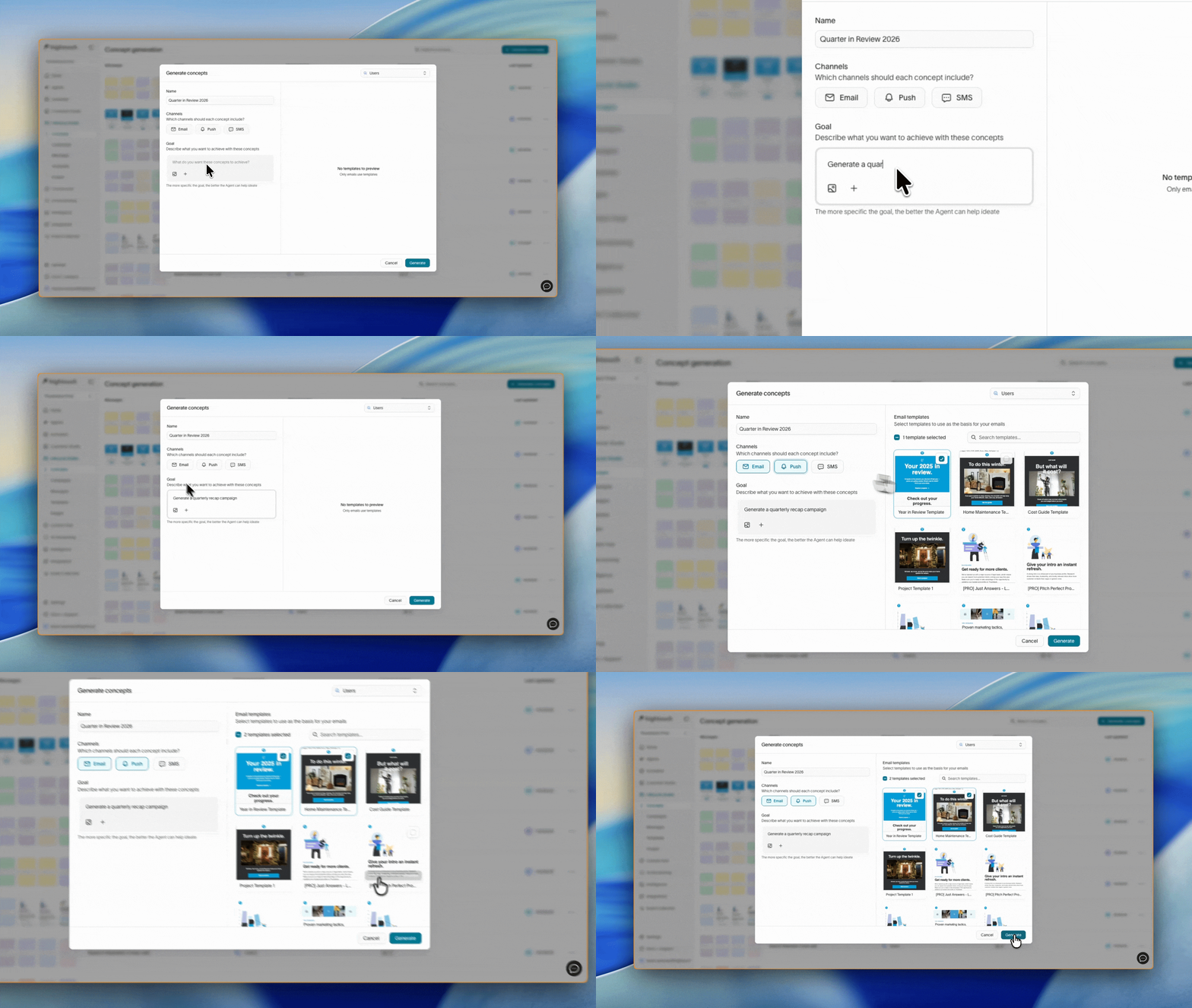
This is where Lifecycle Studio differs from generic AI content tools. Most tools can generate copy, but they don't have context around the Thumbtack brand or who their customers are. Because Hightouch is connected to the team's actual data, brand guidelines, and campaign history, marketers don't have to restate those rules every time they start from a blank page. That becomes especially important when you're creating multiple versions of a campaign.
"You can provide Lifecycle Studio your brand context, your brand tone, and your brand voice with guidelines around what to say, what words to use, and what words not to use. Before, we were just creating a bunch of copy. We were never able to integrate that contextualization layer." — Alex Goldstein, Senior Lifecycle Marketing Manager
The moment it all came together for Alex was while developing a personalized quarterly recap campaign. Historically, it was the kind of idea that never quite made the cut. The effort required across multiple teams was difficult to justify for an unproven concept.
Building it with Lifecycle Studio revealed something bigger than a faster workflow: when execution becomes dramatically easier, entirely new campaigns become possible.
For the first time, ideas that had previously been too expensive or too complicated to pursue became realistic.
“It's not just a faster way of working. It's a much more effective way. There's creativity in that. There's an agility in that.”

Alex Goldstein
Senior Lifecycle Marketing Manager at Thumbtack
The team's role shifted rather than shrank. Marketers still set the strategy, define the creative direction, and decide what gets shipped. But the work that once moved through a series of queues — analysis, content generation, and producing dozens of variants — became something the team could do themselves.
What changed for the team
The operational numbers tell part of the story. A campaign that once took roughly 40 hours of cross-functional effort now takes around 10. Time to launch has compressed from a 4–6 week window to days in most cases.
But the more meaningful shift is the lifecycle workflow itself: fewer handoffs, fewer queues, and fewer weeks lost waiting for other teams to weigh in. Programs that previously sat in the backlog — requiring custom audience work, home-feature-level personalization, or real-time triggers like weather — are now live.
Thumbtack can now send a storm-prep message tailored to a user’s specific region, or a lawn care recommendation that reflects local grass types and seasonal timing. What used to live in a future strategy conversation is now part of the weekly workflow.
The constraint around variants has also disappeared. Where the team previously had to limit campaigns to 1–2 versions based on creative capacity, they can now generate 20+ variants across combinations of home type, ownership status, project history, and geography.
That shift shows up in performance as well. Generic messaging at scale leaves marks on customer trust.
"In the old way of lifecycle," Josh said, "we were doing 1 to 2 variants and we were not sending a personalized experience to users. And that really eroded trust with our core audience — they weren't engaging, they weren't clicking, they weren't coming back."
For Thumbtack, getting personalization right is no longer a question of who to pull in or how long you need to wait.
The day-to-day workflow has changed, and the team is now focused on deciding what to build and test next.
“I've been in lifecycle marketing for a really long time, where you are so heavily reliant on your data science, creative, and copy partners. And while everyone wants to do good work, there's only so many resources and so much capacity. Now, our destinies are in our own hands.”
Josh Mack
Director of Performance Marketing at Thumbtack
What's next
The team is already looking beyond speed and scale toward more dynamic decisioning.
Alex described the next frontier for Thumbtack as moving from segmented campaigns to truly dynamic experiences where agents select content, timing, and messaging based on micro-signals from each user.
That shift depends on high creative throughput and rapid experimentation cycles — both of which are now feasible in a way they weren't before.
“Lifecycle Studio increases my confidence in hitting our annual targets. The more shots you take, the more likelihood you're going to hit. Being able to do more things faster increases my team's ability to hit our targets.”
Josh Mack
Director of Performance Marketing at Thumbtack